


Creatine
Creatine Escaped the Gym. Here's Why Wellness Experts Are Paying Attention
An old sports supplement has become a serious wellness conversation. The reason says a lot about where the category is going.

An old sports supplement has become a serious wellness conversation. The reason says a lot about where the category is going.
What This Article Argues
- Creatine did not change. The wellness conversation around it did. Longevity science reframed muscle as healthspan infrastructure, brain-energy research opened a credible cognitive rationale, and midlife women began asking it to do something the category had never been asked to do before.
- The cognitive case is real but narrow. Creatine's strongest brain signal is in stress states (sleep deprivation, depression, demanding cognitive load), not as a general nootropic for healthy, rested adults.
- For women over 40, creatine paired with resistance training has measured benefits for strength, walking performance, and selected bone properties in published trials. These are modest signals, not transformations.
- The quality question now matters more than the marketing claim. "99.9% purity" alone is incomplete. What matters is audited manufacturing, defined impurity specifications, and lot-level testing.
- This shift is bigger than one ingredient. The wellness consumer is moving from vibes to variables.
Something has changed about creatine. The people changing it are not only powerlifters or men in their twenties. They are physicians talking about bone density with women in their fifties. Sleep researchers studying brain energy. Menopause specialists asking what helps preserve muscle, strength, and resilience through the years when the body starts demanding more from every system at once.
For most of its life as a consumer product, creatine lived beside protein tubs and pre-workout. It was coded as a gym ingredient. Useful, but narrow. That is no longer where the conversation is happening.
The interesting question is not simply what creatine is. The more revealing question is why it has moved from bodybuilding culture into conversations about menopause, cognition, sleep, longevity, and daily health. Creatine did not change. The wellness conversation around it did.
What Is Creatine?
Creatine sits at the center of one of the body's primary energy systems, and the word "energy" deserves more attention than it usually gets in wellness writing.
Every cell that does work, including muscle cells and brain cells, runs on a molecule called ATP. ATP is the body's universal currency for cellular effort. The catch is that cells store very little ATP at any given moment.
When demand spikes, in the seconds a muscle contracts hard or a neuron fires through a complex thought, ATP has to be regenerated quickly. Phosphocreatine is the system that does the regenerating. It hands a phosphate group to ADP and turns it back into ATP, on the scale of milliseconds. Creatine is the substrate that makes that recycling possible (Kreider et al., 2017).
The body produces some creatine on its own, in the liver and kidneys, from three amino acids. The rest is meant to come from food, primarily red meat and fish. Most adults need to replace roughly one to three grams a day, and dietary intake alone often falls short of that, especially for people who eat little meat or fish. Supplementation can raise creatine stores, particularly in people whose intake is low, and in those whose needs may be higher because of training, age, or physiological stress.
There is nothing exotic about it. Creatine monohydrate is one of the most studied supplemental compounds in human nutrition, with several hundred trials behind it across decades. Its mechanism is simple, its biology is well mapped, and its safety record in healthy adults at customary doses is unusually strong for a category that often makes claims it cannot back up (Kreider et al., 2017; Antonio et al., 2021).
That clarity is part of why the wellness world has rediscovered it. In a category crowded with proprietary blends and adaptogenic mystique, a molecule with a clean mechanism and a long evidence trail starts to feel rare.
Why Is Everyone Talking About Creatine Now?
For a long time, creatine research lived in sports science. Most of what was studied was strength, power, and high-intensity performance. That work has not gone away, and it is still where the evidence is most settled. What has changed is everything around it.
In the past decade, the conversation has widened. The longevity movement reframed muscle as healthspan infrastructure rather than aesthetic. The professionalization of menopause medicine reframed midlife as a treatable life stage rather than a private nuisance. GLP-1 medications reframed weight management around muscle preservation and protein adequacy, making vague wellness claims feel obsolete. Once muscle mass, bone density, and cognitive resilience became aspirational, the door to creatine opened from a different direction. It was no longer about gains. It was about staying intact.
Physicians who would have rolled their eyes at supplement marketing a decade ago now suggest creatine to patients in their fifties. Menopause specialists include it in conversations about muscle preservation. Sleep researchers cite it in talks about cognitive resilience. None of this happened because creatine became fashionable. It happened because the questions changed, and the answer was already on the shelf.
"It was no longer about gains. It was about staying intact."
Why Creatine Matters for Women Over 40
One of the most important demographic shifts inside the creatine category has been women entering the conversation. The data is visible at retail. GNC reported in 2025 that women had risen from eighteen percent of creatine buyers in 2020 to thirty percent, and the average buyer age had moved from thirty to thirty-five (GNC, reported by Bloomberg, 2025). That is not a marketing fluctuation. That is a category being repopulated.
2020 to 2025
2020 to 2025
sales growth
Source: GNC retail sales data, 2020 to 2025, reported by Bloomberg (September 2025).
The reason is partly cultural, and partly physiological.
The cultural piece is straightforward. Menopause finally became a public health conversation, not just a private inconvenience. The years between roughly forty and sixty, long treated as a private nuisance, are now discussed openly as a distinct life stage with measurable changes in muscle, bone, sleep, cognition, mood, and energy. Once that conversation reached scale, the question of what to actually do about it followed.
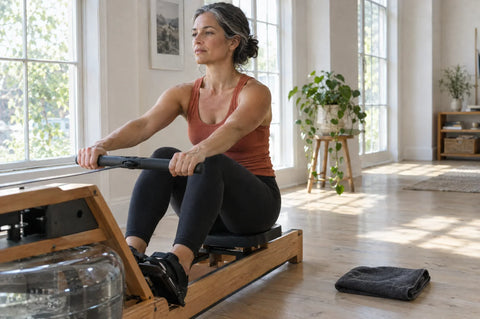
The physiological piece is where creatine earns its seat at the table. Through perimenopause and menopause, changes in estrogen occur alongside shifts in muscle, bone, sleep, recovery, and body composition. Creatine becomes relevant because it sits close to several of those systems, especially when paired with resistance training. The most relevant systematic review of older women found that creatine combined with resistance training improved upper-body strength in a review of ten trials, and in studies lasting 24 weeks or longer, lower-body strength improved as well (dos Santos et al., 2021). A two-year trial in postmenopausal women found that creatine alongside training maintained some proximal femur geometric properties and improved walking time, even where it did not move overall bone density (Chilibeck et al., 2023). A 2021 review by Smith-Ryan and colleagues made the case that women are a physiologically distinct and historically underexamined population in creatine research, particularly across hormonal transitions (Smith-Ryan et al., 2021). For a fuller look at why purity matters specifically in this group, this piece walks through it.
These are not promises of transformation. They are modest, measured signals in exactly the population that has been historically left out of supplement research.
What is striking, in the search behavior of this audience, is how unlike traditional supplement buyers they sound. They are not asking how to stack creatine for performance. They are asking whether the brand matters, whether the manufacturing is clean, whether long-term daily use is safe, whether something taken alongside other supplements will interact. They are behaving, in other words, like serious consumers of a daily ingredient.
Creatine, Brain Energy, and Cognitive Stress
The newest layer of the conversation is what creatine may do for the brain.
The brain is metabolically expensive. It uses roughly twenty percent of the body's total energy at rest, and it runs on the same ATP system that muscles do. When researchers raise brain creatine through supplementation, bioenergetic markers move. A 2021 review concluded that creatine may support cognitive processing most plausibly in conditions characterized by brain creatine deficit or acute stress, including sleep deprivation, aging, mild traumatic brain injury, and depression, while emphasizing that optimal dosing for brain effects remains unresolved (Roschel et al., 2021). A 2024 systematic review and meta-analysis reported positive signals for memory, attention time, and processing speed time, but the findings should be interpreted cautiously. The analysis was later corrected in part and criticized for potential unit-of-analysis errors, and EFSA concluded in 2024 that a cause-and-effect relationship between creatine supplementation and improved cognitive function had not been established (Xu et al., 2024; EFSA, 2024; Citherlet, 2026). That nuance matters.
In sleep-deprived participants, high-dose acute creatine studies have shown improvements in processing speed and task performance, along with measurable changes in cerebral energy markers (Gordji-Nejad et al., 2024). That does not mean a standard daily dose should be framed as a general cognitive enhancer. A well-designed 2023 trial of five grams a day for six weeks in 123 participants found at most a small effect that did not reach statistical significance in healthy, rested adults (Sandkühler et al., 2023). The most defensible read is that creatine's brain-energy rationale is strongest when the system it supports is under strain. That includes sleep deprivation and other high-demand states. Whether that translates reliably into everyday cognitive benefit, including midlife brain fog, is still being studied.
Early trials have also explored creatine as an adjunct in depression, including a notable study in women taking creatine alongside an SSRI (Lyoo et al., 2012). The signal is interesting, but still preliminary. The connection between muscle, brain, and mood is its own story, and one worth reading on its own terms.
Brain fog and word-finding difficulty are among the most common complaints in perimenopause, and creatine's brain-energy rationale is at least plausible in that context. The most defensible version of the claim is this: creatine has a real mechanism in the brain's energy system, the evidence is strongest when cognition is stressed, and midlife often places simultaneous demands on multiple systems: sleep, recovery, muscle, cognition, mood, and metabolic resilience. That is not a marketing statement. It is a reasonable hypothesis being studied.
Why Creatine Quality Matters
As creatine becomes a daily wellness ingredient rather than a gym supplement, the question changes from whether it works to whether it is worthy of daily use.
The quiet truth of the creatine market is that the front label often hides the manufacturing story. Two products can both say "creatine monohydrate" and still differ in sourcing, process controls, impurity testing, and transparency. For a compound someone may take daily for years, that difference matters.
Most consumers do not know this. They see "99.9% purity" on a label and assume the conversation ends there. It does not. The number describes one thing. It does not describe the other 0.1%, which is where the question lives.
Creatine is synthesized from sarcosine and cyanamide. The reaction can leave behind small amounts of unreacted starting materials and byproducts. The relevant ones are dicyandiamide and dihydro-1,3,5-triazine. Trace heavy metals can also drift in from low-grade source chemicals or poorly controlled manufacturing. These are not nutrients. They are process-related impurities. The relevant question is not whether they sound alarming. The question is whether they are measured, limited, and disclosed. The European Food Safety Authority has published specifications covering creatinine, dicyandiamide, dihydro-1,3,5-triazine, and heavy metals in creatine monohydrate (EFSA, 2004). A peer-reviewed market survey of commercial creatine monohydrate products found measurable variation between products, with a meaningful share exceeding one or more of those impurity thresholds (Moret et al., 2011).
Available independent testing has shown that creatine products can vary meaningfully in impurity profile, even when the front label looks identical. The difference is invisible to most buyers, which is precisely why the brand and the manufacturing question matter. If the deeper testing data is what you're after, this is the place to start.
This is also where dietary supplement regulation reveals its limits. In the United States, dietary supplements are not pre-approved for safety or effectiveness before being marketed (FDA). The brand carries the burden of doing the work. A brand that has not done that work has not earned daily, multi-decade use. A brand that has, has built the foundation of something worth trusting. There is a longer treatment of why brand matters here.
How to Choose a Creatine Supplement
There is no need to overthink this. The right questions are the same questions a person would ask of any compound they planned to take every day for the next two decades.
A short list, in order of importance:
- Where is the creatine manufactured, and under what quality system. The country and the audit standard both matter.
- Is the form creatine monohydrate. Other forms on the market are mostly marketing variations without strong evidence advantages, and many are less stable in solution.
- Are independent third-party tests run on each lot, and is the certificate of analysis available on request. A brand that publishes its lot numbers and testing data has chosen accountability.
- Are dicyandiamide, dihydro-1,3,5-triazine, and heavy metals measured against EFSA specifications, not just an aggregate "99.9% purity" headline.
- Is the dose meaningful. The customary daily intake supported by the evidence is three to five grams of creatine monohydrate (Kreider et al., 2017). Anything substantially under that is unlikely to do what the research describes.
- How does it fit with the rest of how you take care of yourself. For midlife women, creatine combined with resistance training is the pairing the literature actually studied. Behavior compounds the molecule.
That last point is the one most categories ignore. The most defensible creatine claim in 2026 is not "take this and feel better." It is "take this, lift things on a regular basis, and the evidence supports the combination."
What This Shift Says About Wellness
The rise of creatine outside the gym is not an isolated story. It is part of a broader correction inside the wellness category, and it is worth saying out loud.
Between roughly 2015 and 2021, wellness rewarded mystique. Ancient. Adaptogenic. Proprietary. Detoxifying. The category was content to compete on story, and the consumer was content to buy it. Several things have happened since. GLP-1 medications reframed weight management around muscle and protein adequacy. Longevity discourse moved aspirational language from beauty to body composition and metabolic health. Midlife women, increasingly underserved by traditional medicine, began doing their own research. Inflation made eighty-dollar greens powders harder to defend on faith alone.
The consumer who emerged from all of this is more skeptical, more literate, and more interested in foundational compounds than in novel ones. They want answers to five practical questions. What is it. What dose. What does the evidence support. What behavior pairs with it. Is it worth the recurring spend.
Creatine answers those questions cleanly. So does collagen, in its own way, especially when paired with creatine in a midlife context where muscle, tendon, bone, and skin are all under pressure at once. The case for taking them together, and what is and isn't proven about the pairing, is its own piece. So does protein. So do magnesium and omega-3s. These are not new ingredients. They are well-studied ones being rediscovered in a more demanding cultural moment.
The pattern, if there is one, is this. The wellness category is moving from vibes to variables. The ingredients winning that shift are the ones with the clearest mechanism, the longest evidence trail, and the strongest connection to daily behavior.
For healthy adults, creatine monohydrate at customary doses is generally considered well tolerated. Anyone with kidney disease, complex medical conditions, or medication concerns should speak with a qualified clinician before starting (Antonio et al., 2021).
Creatine has become a useful case study because it answers many of the new questions well. Its mechanism is clear. Its evidence base is unusually broad. Its safety record in healthy adults at customary doses is strong. And the question of which creatine, made how, tested by whom, has finally entered the conversation in the way it should have decades ago. For women specifically thinking through that decision, this is the pillar piece.
That is the real story of how creatine escaped the gym.
"The molecule did not change. The standards did."
Frequently Asked Questions
What is creatine?
Creatine is a compound the body uses to regenerate ATP, the molecule that powers cellular work in muscle and brain tissue. The body makes some on its own and gets some from red meat and fish. Supplementation reliably raises muscle creatine stores, while brain effects appear more variable and are still being studied.
Is creatine only for athletes?
No. The original evidence base was built in sports science, but the past decade of research has examined creatine in older adults, postmenopausal women, sleep-deprived adults, and adjunctive depression treatment. It is being used and studied well beyond athletic performance.
Is creatine safe for women over 40?
At customary doses of three to five grams of creatine monohydrate a day, creatine has a well-established safety record in healthy adults, including older women in published trials (Kreider et al., 2017; Antonio et al., 2021). Anyone with kidney disease, complex medical conditions, or medication concerns should consult a qualified clinician before starting.
Does creatine help with menopause?
Creatine is not a menopause treatment. The relevant question is whether it helps with the systems midlife taxes most: muscle, bone, recovery, and possibly cognition under stress. Trials combining creatine with resistance training in older and postmenopausal women have shown gains in strength, walking time, and some bone geometric properties (dos Santos et al., 2021; Chilibeck et al., 2023).
Does creatine help with brain fog?
The cognitive evidence is mixed. Studies show measurable changes in brain energy markers and possible benefit when cognition is stressed, including sleep loss, but limited effect in healthy, rested adults (Roschel et al., 2021; Xu et al., 2024; Gordji-Nejad et al., 2024; Sandkühler et al., 2023). The accurate framing is "plausible in midlife stress states, still under study."
Does the brand of creatine matter?
Yes. Two products can both say "creatine monohydrate" and still differ in sourcing, process controls, impurity testing, and transparency. "99.9% purity" alone is incomplete. Buyers should look for disclosed manufacturing standards, third-party batch testing, and testing for dicyandiamide, dihydro-1,3,5-triazine, creatinine, and heavy metals against recognized specifications.
What should I look for on a creatine label?
Creatine monohydrate as the form. Three to five grams as the daily dose. Country of manufacture and audit standard disclosed. A certificate of analysis available on request. Lot numbers published. Third-party testing referenced. If a brand cannot answer those questions clearly, that tells you something.
- Antonio J, Candow DG, Forbes SC, et al. Common questions and misconceptions about creatine supplementation: what does the scientific evidence really show? Journal of the International Society of Sports Nutrition. 2021;18(1):13.
- Chilibeck PD, Candow DG, Gordon JJ, et al. A 2-yr randomized controlled trial on creatine supplementation during exercise for postmenopausal bone health. Medicine & Science in Sports & Exercise. 2023;55(10):1750-1760.
- Citherlet T. Commentary: The effects of creatine supplementation on cognitive function in adults: a systematic review and meta-analysis. Frontiers in Nutrition. 2026;13:1716285. PMID: 42039906.
- dos Santos EEP, Candow DG, Forbes SC, Ostojic SM, Chilibeck PD. Efficacy of creatine supplementation combined with resistance training on muscle strength and muscle mass in older females: a systematic review and meta-analysis. Nutrients. 2021.
- European Food Safety Authority. Opinion of the Scientific Panel on Food Additives, Flavourings, Processing Aids and Materials in Contact with Food on creatine monohydrate for use in foods for particular nutritional uses. EFSA Journal. 2004;2(4):36.
- EFSA Panel on Nutrition, Novel Foods and Food Allergens (Turck D, et al.). Creatine and improvement in cognitive function: evaluation of a health claim pursuant to article 13(5) of regulation (EC) No 1924/2006. EFSA Journal. 2024;22(11):e9100. PMID: 39564533.
- Gordji-Nejad A, Matusch A, Kleedörfer S, et al. Single dose creatine improves cognitive performance and induces changes in cerebral high energy phosphates during sleep deprivation. Scientific Reports. 2024;14:4937.
- Bloomberg. Women and older adults are driving sales of creatine higher. September 2, 2025. GNC retail data: women rose from 18% to 30% of creatine purchases between 2020 and 2025; average buyer age rose from 30 to 35; creatine sales up 75% from 2020.
- Kreider RB, Kalman DS, Antonio J, et al. International Society of Sports Nutrition position stand: safety and efficacy of creatine supplementation in exercise, sport, and medicine. Journal of the International Society of Sports Nutrition. 2017;14:18.
- Lyoo IK, Yoon S, Kim T-S, et al. A randomized, double-blind placebo-controlled trial of oral creatine monohydrate augmentation for enhanced response to a selective serotonin reuptake inhibitor in women with major depressive disorder. American Journal of Psychiatry. 2012;169(9):937-945.
- Moret S, Prevarin A, Tubaro F. Levels of creatine, organic contaminants and heavy metals in creatine dietary supplements. Food Chemistry. 2011;126(3):1232-1238.
- Roschel H, Gualano B, Ostojic SM, Rawson ES. Creatine supplementation and brain health. Nutrients. 2021;13(2):586.
- Sandkühler JF, Kersting X, Faust A, et al. The effects of creatine supplementation on cognitive performance: a randomised controlled study. BMC Medicine. 2023;21(1):440.
- Smith-Ryan AE, Cabre HE, Eckerson JM, Candow DG. Creatine supplementation in women's health: a lifespan perspective. Nutrients. 2021;13(3):877.
- U.S. Food and Drug Administration. Information for Consumers on Using Dietary Supplements. 2022 (updated). The FDA is not authorized to approve dietary supplements for safety or effectiveness before they are marketed.
- Xu C, Bi S, Zhang W, Luo L. The effects of creatine supplementation on cognitive function in adults: a systematic review and meta-analysis. Frontiers in Nutrition. 2024;11:1424972.
Creatine for everyday strength, not only the gym.
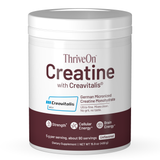
5 grams of Creavitalis® creatine monohydrate a serving, made in Germany by Alzchem and third-party tested. Subscriptions ship free, and your first order carries a 60-day money-back guarantee.


These statements have not been evaluated by the Food and Drug Administration. This product is not intended to diagnose, treat, cure, or prevent any disease.
Individual results may vary. Studies cited examine individual ingredients at specified doses.
Creavitalis® and Creapure® are registered trademarks of Alzchem Group AG. ThriveOn is a licensed Creavitalis® trademark user.


