

Creatine
Why Creatine Matters for Women in Midlife: What the Latest Research Actually Shows
What creatine really does for women in midlife, what it does not, and a plain read on the brain, with every study named.

What creatine really does for women in midlife, what it does not, and a plain read on the brain, with every study named.
At a Glance
- Women carry lower creatine stores than men and, on average, eat less of it. One widely cited women's-health review estimates females have 70 to 80 percent lower endogenous creatine stores than males, and midlife adds more pressure.
- The strongest evidence is for muscle and strength. A 2026 meta-analysis of 7 trials in 608 postmenopausal women found creatine plus resistance training added lean mass and leg-press strength beyond training alone.
- Creatine works hand in hand with strength training: the lifting drives the gains, and creatine helps you get more out of every set. And because resistance training is one of the most proven ways to protect your bones, that daily strength habit is doing double duty.
- The studied dose is 5 grams of creatine monohydrate a day, no loading and no measuring, exactly what one Stronger sachet delivers. If the scale nudges up a little early on, that is water settling into the muscle, not fat.
- For the brain, the angle is energy. Creatine supports cellular energy metabolism, and the brain is one of the most energy-hungry tissues you have, so the working idea is steady energy support that builds with daily use; the evidence here is early.
There is a particular week when you notice it. The grocery bags that used to be one trip now feel like they want to be two. The jar lid holds out a second longer. You get up from the floor after sitting with a child, and your body takes a beat to catch up. Nothing dramatic, nothing you would mention to anyone. Just a quiet sense that the body is keeping a different kind of score than it used to.
This is not about effort, and it is not about willpower. Through midlife, the chemistry that builds and holds muscle genuinely changes, and creatine sits in the middle of that story. It is also one of the very few supplements with real, repeatable evidence behind it for this exact stage of life. The research has moved quickly in the last year, so here is what it actually shows, including the parts the louder corners of the internet tend to skip.
The creatine gap: why this is a women's question
Creatine is not exotic. Your body already makes some, your muscles store it, and you get more of it from red meat and fish. The catch is that women start from less. Women appear to have lower total creatine stores than men and, on average, eat less dietary creatine from foods like red meat and fish. One widely cited women's-health review estimates that females have 70 to 80 percent lower endogenous creatine stores compared with males (Smith-Ryan and colleagues, women's-health lifespan review).
Midlife adds pressure on top of that starting point. As estrogen shifts through perimenopause and menopause, creatine metabolism, muscle, activity, and protein intake all start to matter more, at the same moment that muscle gets harder to keep. That combination is why creatine is genuinely more of a women's question than the gym-bro packaging would ever suggest, and why it lands differently for creatine for women in menopause than it does for a twenty-five-year-old man loading up before a workout.
Strength and lean mass in midlife: the strongest evidence
If you take one thing from the current research, take this. The clearest, best-supported benefit of creatine for women in midlife is for muscle and strength.
The anchor is a 2026 meta-analysis published in the Journal of the International Society of Sports Nutrition (Naddafha et al., 2026). It pooled 7 randomized controlled trials in 608 postmenopausal women, average age about 62, and found that creatine taken at 5 grams or more per day, combined with resistance training, produced greater gains than training alone: roughly a third of a kilogram more lean mass (about 0.37 kg) and about 7.5 kg more leg-press strength. The author list includes Richard Kreider and Jose Antonio, two of the most published researchers in the field, which is part of why the finding carries weight.
From a 2026 meta-analysis of creatine at 5 grams or more per day in postmenopausal women, average age about 62 (Naddafha et al., 2026). The gains are with resistance training, and the strength work itself is a proven way to support bone.
A note on who this was studied in, because it matters. The strongest direct evidence sits in postmenopausal women, with an average age around 62. The rationale starts earlier, as muscle, hormones, activity, and protein intake all begin shifting through midlife, and the cleanest data so far is in women a little further along than 40.
The mechanism is simple enough to picture. Creatine helps muscle cells rapidly recycle ATP, the cell's energy currency, through a reserve called phosphocreatine. With a fuller reserve, a muscle can do a little more work, set after set, and over weeks of training that extra work adds up to more strength and more lean tissue.
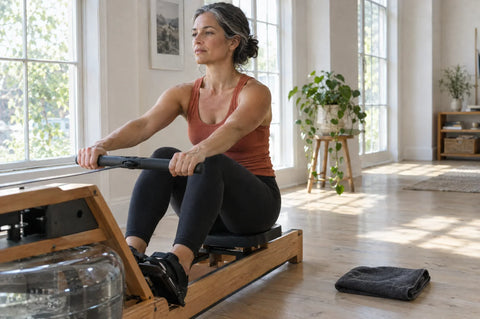
Two things worth knowing so you use it right. First, creatine works with your training, not instead of it: the lifting does the building, and creatine helps you squeeze a little more out of every session. The sachet earns its keep when the weights actually come off the rack. Second, the bone payoff comes from the strength work itself, which is one of the most proven ways to keep bone strong as you age. Creatine's role is to help you train harder and recover, and that strength is what keeps you capable for the long run.
The wider evidence in older adults points the same way. A 2026 review from 13 of the field's leading researchers pooled 18 trials and 792 adults over 50 and found creatine plus resistance training added 1.18 kg more lean mass than training alone (Candow et al., 2026). We break it down in creatine for sarcopenia. A 2026 trial in adults aged 45 to 65 went a step further and tested creatine without exercise: it added lean mass on its own, and the biggest gains came with training (Chun et al., 2026).
The dose, and what is normal
For the muscle-and-strength outcome that matters most here, 5 grams of creatine monohydrate a day is the clearest, most practical dose, taken consistently, with no loading phase required. Higher doses do show up in some research settings, but they are not necessary for the everyday midlife routine we are talking about. We set out what the trials found about loading separately.
About the water weight, since it is the thing women are most often warned about. Creatine draws a little water into the muscle cell, which is part of how it works, and some women see a small rise on the scale in the first couple of weeks; it is largest with a loading phase and small or absent at 5 grams a day (Antonio et al., 2021). That is water inside the muscle, not fat, and it settles. On safety, creatine has one of the longest track records in all of supplement research, and the evidence supports daily use at 3 to 5 grams in healthy adults, with no evidence of harm to kidney function in healthy adults (Kreider et al., 2017; Antonio et al., 2021). The sensible exception: if you have a kidney condition or are under a doctor's care, check with your clinician first.
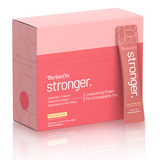
That 5 grams a day is the part worth getting right, and it is the amount in a single Stronger sachet, made with Creavitalis® creatine, so you get the studied dose without managing a separate tub.*

Creatine and the midlife brain: a plain read
The brain is the other place creatine earns attention in midlife, and the angle that holds up is energy. Creatine helps your cells make and recycle energy, and the brain is one of the most energy-demanding tissues in the body. As estrogen shifts through perimenopause and menopause, brain energy metabolism and creatine handling become more relevant, especially for women who already start from lower stores, which is part of why midlife may be when this matters most.
Early research is starting to look right here. A small 2025 trial in 36 perimenopausal and menopausal women raised creatine levels in the frontal brain over eight weeks, an encouraging signal for the brain-energy story (Korovljev et al., 2025; published in print 2026). It is early, and it used a different form and a lower dose than Stronger's 5 grams of monohydrate, so we hold it as a direction worth watching. For balance: the European Food Safety Authority reviewed the cognition trials in 2024 and concluded a cause-and-effect relationship has not been established, so we treat the brain angle as plausible, not proven (EFSA, 2024). The useful way to think about it is steady, foundational support for the brain's energy supply that builds over weeks, the same way the muscle benefit does. (For the bigger picture on how working muscle and the brain are linked, see the muscle-brain connection.)
A quick word on quality
One practical note, because not all creatine is the same, and for something you take every day the source matters more than the label design. Stronger uses Creavitalis® creatine, made in Germany by Alzchem and tested for heavy metals and contaminants. We keep the deep version of this on its own pages rather than crowd it in here: this is how to evaluate creatine quality, and this is the difference between Creavitalis® and Creapure if you want to compare the two research-grade options side by side.
What this actually means for you
So here is the shape of it. Creatine's strongest evidence in midlife is for strength and lean muscle, working hand in hand with the resistance training that also keeps your bones strong. Its brain angle is cellular energy, building steadily. And 5 grams a day of a clean, well-made monohydrate is the dose the research keeps coming back to.
That does not mean you need a gym identity. It means two or three short strength sessions a week, done consistently, give creatine something to amplify. The supplement is the easy part. The movement is what turns it into a result.
That 5 grams is the backbone of Stronger, our daily sachet, which pairs it with marine tripeptide collagen, taurine, rhodiola, hyaluronic acid, and vitamins D3, K2, and C, so the rest of the midlife foundation lives in one place. Collagen rounds out the formula as part of the daily foundation.*
Creatine is not magic. It is not a menopause cure, and it is not a proven fix for brain fog. But for a woman in midlife who is already lifting, or willing to start, 5 grams a day of a high-quality creatine monohydrate is one of the most defensible supplement choices she can make. The research finally agrees with what a lot of women already suspected: this was never just for the guys at the gym.
Frequently Asked Questions
Does creatine build muscle in women over 40?
Yes, when it is paired with resistance training. The strongest evidence, a 2026 meta-analysis in postmenopausal women, found that creatine plus lifting produced greater gains in lean mass and leg-press strength than lifting alone (Naddafha et al., 2026). Creatine supports the training, it does not replace it.
How much creatine should a woman take?
Five grams of creatine monohydrate a day, taken consistently. No loading phase is needed. That is the dose used across most research and the amount in one Stronger sachet.
Will creatine make women bulky?
No. Any early change on the scale is a small amount of water held inside the muscle, not fat, and it settles within a few weeks. Building large muscle takes far more than a daily creatine habit.
Does creatine help bone density?
The bone benefit here comes from the resistance training, which is one of the most proven ways to keep bone strong with age. Creatine's role is to help you train harder and recover, so you can keep doing the strength work that supports your bones.
Does creatine help with brain fog in menopause?
Creatine is not a brain-fog treatment, and we will not pretend otherwise. What it supports is cellular energy metabolism: it helps your cells make and recycle energy, and the brain is highly energy-demanding. Midlife women may be especially responsive given lower starting stores, so think steady energy support that builds over time, not an overnight fix.
Is creatine safe to take long term?
Creatine is one of the most studied supplements there is, and research supports daily use at 3 to 5 grams in healthy adults, including no evidence of harm to kidney function (Kreider et al., 2017; Antonio et al., 2021). One practical note: creatine can raise blood creatinine on lab tests without necessarily signaling kidney damage, so tell your clinician you take creatine if you are having kidney labs checked. If you have a kidney condition or are under a doctor's care, check with your clinician first.
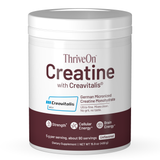
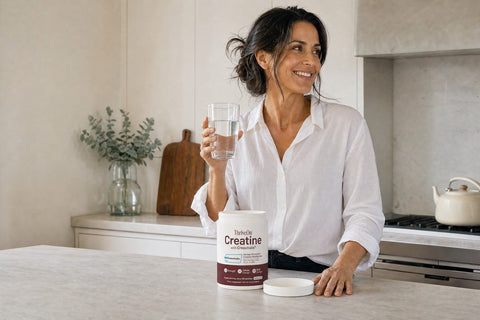
The 5 gram daily dose, on its own or in Stronger.
5 grams of Creavitalis® creatine monohydrate a serving, made in Germany by Alzchem and third-party tested. Subscriptions ship free, and your first order carries a 60-day money-back guarantee.


- Naddafha et al. (2026). Creatine monohydrate for lean mass, strength, and bone density in postmenopausal women: a systematic review and meta-analysis. Journal of the International Society of Sports Nutrition, 23(1), 2668435. PubMed 42141930. DOI 10.1080/15502783.2026.2668435.
- Smith-Ryan, A. E., Cabre, H. E., Eckerson, J. M., & Candow, D. G. (2021). Creatine Supplementation in Women's Health: A Lifespan Perspective. Nutrients, 13(3), 877. PubMed 33800439. (Source for "70 to 80 percent lower endogenous creatine stores.")
- European Food Safety Authority (2024). Scientific opinion on creatine and cognitive function. DOI 10.2903/j.efsa.2024.9100. PubMed 39564533. (Cause-and-effect not established; the UK Nutrition and Health Claims Committee reached the same conclusion in 2024.)
- Commentary on the unit-of-analysis error in the creatine-cognition meta-analysis (2026). Frontiers in Nutrition. DOI 10.3389/fnut.2026.1716285.
- Korovljev et al. (2025, print 2026), CONCRET-MENOPA trial. Journal of the American Nutrition Association, 45(3), 199-210. DOI 10.1080/27697061.2025.2551184. PubMed 40854087. (Perimenopausal and menopausal women; creatine HCl, ~1.5 g/day; reaction time and frontal brain creatine; partly funded by Vireo Systems / CON-CRET, which supplied the product.)
- Kreider, R. B., et al. (2017). International Society of Sports Nutrition position stand: safety and efficacy of creatine supplementation. Journal of the International Society of Sports Nutrition, 14, 18. PubMed 28615996.
- Antonio, J., et al. (2021). Common questions and misconceptions about creatine supplementation: what does the scientific evidence really show? Journal of the International Society of Sports Nutrition, 18(1), 13. PubMed 33557850. (Kidney function, water weight.)
- Candow, D. G., Traxler, S., Chilibeck, P. D., Forbes, S. C., Ostojic, S. M., Stout, J. R., Antonio, J., Kreider, R. B., Bonilla, D. A., Roberts, M. D., Tarnopolsky, M. A., Angelini, F., & Fabiano, N. (2026). Creatine monohydrate supplementation: one tool in the toolbox for treating sarcopenia. Longevity, 7(1), 2727350. DOI 10.1080/30653495.2026.2727350.
* These statements have not been evaluated by the Food and Drug Administration. This product is not intended to diagnose, treat, cure, or prevent any disease.
Creatine's benefits for strength and lean mass are greatest when it is combined with resistance training. Individual results vary. Talk with your healthcare provider before starting any new supplement.


