






Brain health
The Hope Molecule: Why Your Muscles Are Your Brain's Most Sophisticated Ally
Your muscles are far more than mechanical tissue because they are messengers.

Your muscles aren't just for moving. They're messengers.
When you exercise, your muscles release a protein called irisin. In animal studies it reaches the brain. It may help activate BDNF. Research suggests it may support memory, mood, and resilience.
Researchers call it the "hope molecule." Not because it's magic. Because of what the evidence suggests it actually does.
Does strength training help menopause brain fog? Evidence suggests it may. Exercise, including resistance training, is associated with the release of irisin, a myokine that crosses the blood-brain barrier and is associated with BDNF production, a protein linked to memory and mood regulation.
What to do: 2-3 resistance sessions per week, 30-45 minutes, at a load that challenges you.
Timeline: Some women report mood and clarity improvements within weeks. Effects on the brain are expected to build over months.
This isn't medical advice, and brain fog has multiple causes. But the muscle-brain axis is one lever many women can control.
For decades, we understood muscle as mechanical tissue. Something that contracts, lifts, and burns calories. We measured its value in tone, in definition, in the number on the scale it helped move.
Not wrong. Just incomplete.
Muscle is an endocrine organ. It doesn't just respond to signals from your brain and hormones. It sends them back. Including to your brain.
This changes everything about how we think about resistance training, particularly for women navigating perimenopause and menopause. You're not training to shrink. You're cultivating a biological communication system that speaks directly to your nervous system.
Every rep under load initiates a dialogue. Your brain is listening.
The Minimum Effective Dose
The good news: you don't need to become a powerlifter. General strength-training guidelines suggest a minimum effective dose that's achievable for most women.
If you're new to resistance training: Start with 2 full-body sessions per week. Focus on learning the movements. Leave 2-3 reps "in reserve", meaning stop before failure while you build form and confidence.
The Protocol
Frequency: 2-3 resistance sessions per week. This appears to be sufficient for maintaining and building muscle mass while producing consistent myokine signaling.
Duration: 30-45 minutes of intentional work. Not including warm-up and cool-down. This is time under load.
Movement selection: Compound movements that recruit large muscle groups: squats, deadlifts, presses, rows, lunges. Movements that challenge multiple joints and muscle groups simultaneously.
Load: Heavy enough that the last 2-3 repetitions of each set require genuine effort.
What "Heavy" Actually Means
This is where many women hesitate. The word "heavy" conjures images of straining, grunting, injury risk. It doesn't have to mean any of those things.
"Heavy" means working at the edge of your current capacity. If you can complete 12 repetitions easily and could do 5 more, that's not heavy. If repetitions 10-12 require concentration, effort, and a slight slowing of your tempo, you're in the right range.
Progressive adaptation means the weight that challenges you today will feel lighter in 6 weeks. That's not failure. That's your nervous system and muscles adapting. When it becomes easy, you add a small amount of weight and the process continues.
The fear of "getting bulky" persists despite decades of evidence to the contrary. Women don't have the hormonal environment for bodybuilder-level hypertrophy. What resistance training produces in women is lean, functional tissue. Muscle that serves you rather than burdens you.
Muscle as an Endocrine Organ: The Science
This is relatively new science. Researchers only identified muscle's endocrine function in the early 2000s. For most of modern medicine's history, we categorized muscle alongside bone and skin: structural tissue, important but passive.
Then we discovered myokines.
What Are Myokines?
Myokines are signaling molecules released by contracting muscle fibers. Think of muscle as a communication network. When it contracts under meaningful load, it transmits chemical signals throughout your body. These signals reach your liver, your fat tissue, your immune system. And critically, your brain.
Scientists have now identified several hundred different myokines. Some regulate metabolism. Some modulate inflammation. Some appear to influence mood, cognition, and neuroplasticity.
The muscle you carry isn't just about strength or appearance. It's a broadcasting station. The more muscle you have, and the more frequently you use it under load, the more robust your signaling capacity.

The muscle-brain axis: myokines released during contraction travel through the bloodstream and cross the blood-brain barrier.
Irisin: The Hope Molecule
Among the hundreds of myokines, one has captured particular attention: irisin.
Irisin is released during exercise, with some research suggesting resistance training may produce particularly notable release. What makes irisin remarkable is its ability to cross the blood-brain barrier, that highly selective membrane that protects your brain from most circulating molecules.
Once irisin reaches the brain, it may influence BDNF signaling: Brain-Derived Neurotrophic Factor.
BDNF is sometimes called "fertilizer for the brain." It supports the growth of new neurons, strengthens existing neural connections, and plays a role in memory consolidation, mood regulation, and cognitive flexibility. Lower BDNF levels have been observed in some studies of depression and cognitive impairment.
Dr. Kelly McGonigal, health psychologist and author of The Joy of Movement, popularized the term "hope molecules" to describe myokines, and irisin is the best-known example. Not because it offers false promises, but because of what the research actually demonstrates: a measurable biological pathway from physical effort to mental resilience.
This is the muscle-brain axis in action. Muscle isn't just the organ of movement. It's increasingly understood as an organ of metabolic health, immune function, and potentially brain protection.
When you contract muscle under load, you're not just building strength. You're initiating a cascade of chemical communication that reaches into your brain and tells it: adapt, protect, grow.
What human studies show: A 2024 systematic review and meta-analysis in the Journal of Sport and Health Science (62 studies, 1,193 participants) found that a single bout of either aerobic or resistance exercise raised circulating myokines including irisin, with no significant difference between the two modes. Most changes were small and short-lived, and the authors describe the evidence as limited but expanding.
What animal studies suggest: Research in Cell Metabolism showed that raising blood irisin in mice increased BDNF expression in the hippocampus, and later mouse studies linked irisin to memory and synaptic plasticity. Human confirmation of these pathways is ongoing.
Sources: PMID 38604409 (Bettariga 2024), PMID 24120943 (Wrann 2013), PMID 34417591 (Islam 2021)
Why Challenge Matters
Here's the key insight about the muscle-brain axis: the signal responds to challenge.
Myokine release depends on muscle contraction, so the amount of muscle you have and how hard you work it both matter. A gentle walk is valuable for circulation, stress relief, mood, and cardiovascular health. It absolutely counts as movement. The myokine cascade runs on muscle, though, and only one kind of training reliably builds and keeps that muscle.
This isn't an argument against walking. Movement of any kind benefits the body. But if your goal is to harness the muscle-brain axis, to keep the endocrine capacity that sends protective signals to your nervous system for decades, you have to keep the muscle that produces it.
That means load.
Why Resistance Matters More Than You've Been Told
Women have been told for decades that cardio is the path to health. Run more. Spin harder. Keep that heart rate elevated. Cardiovascular exercise does offer genuine benefits: improved heart health, better insulin sensitivity, stress reduction. Walking, cycling, swimming. All valuable.
But cardiovascular exercise primarily challenges your heart and lungs. Resistance training challenges your muscles. Different inputs produce different outputs.
Both aerobic and resistance exercise trigger irisin release, and a 2024 meta-analysis found no clear difference between the two. What resistance training does uniquely is build and keep the muscle that does the signaling.
The reframe isn't "cardio bad, weights good." It's understanding that different types of movement serve different biological functions. If you want to keep the muscle-brain axis working for the long run, you need to keep the muscle, and that means challenging it directly.
That means progressive resistance, but "resistance" is broader than barbells. Dumbbells, machines, resistance bands, bodyweight exercises, even carrying groceries. What matters is that the load challenges you, relative to your current capacity. If you're just starting out, resistance bands and bodyweight movements count. The goal is progressive challenge, not a specific number on a weight plate.
Why This Matters Now: The Perimenopause Connection
For women in their 40s and 50s, the muscle-brain axis becomes especially relevant.
As estrogen declines during perimenopause and menopause, maintaining muscle mass becomes more challenging. Estimates vary, but muscle loss tends to accelerate during the menopausal transition, precisely when many women find it harder to prioritize strength training.
This creates a compounding dynamic. Less muscle means diminished signaling capacity. Fewer myokines reaching your brain. Potentially reduced BDNF production. At the exact moment when many women experience brain fog, mood disruption, and mental fatigue, the biological system that may help protect cognitive function is harder to maintain.
You're not just losing strength. You may be losing a brain-supportive communication system.
This is why the conversation about menopause brain fog needs to include resistance training. Not as a generic "exercise is good for you" recommendation, but as a specific, targeted approach with measurable biological mechanisms.
Cultivating and maintaining muscle during perimenopause isn't vanity. It may be neurological support.
Fueling the Communication System
You can't cultivate the organ without the raw materials. And most diets don't provide them.
This is where the conversation shifts from training to nutrition, and specifically to the foundational inputs your body requires to build and maintain muscle tissue, support recovery, and sustain the signaling capacity we've been discussing.
During perimenopause, many women experience a gap between training effort and recovery. Sleep disruptions, elevated cortisol, and shifting hormones can all affect how efficiently your body rebuilds after exercise. The signaling system is intact. The communication pathways exist. But without adequate nutritional support, recovery slows and training momentum stalls.
Creatine: The Spark for the Signal
Creatine is one of the most studied sports nutrition ingredients, with decades of research supporting its safety and effectiveness for strength and work capacity. Yet most women have never considered taking it, associating it with male bodybuilders and water retention. (For a deeper dive, see our guide to creatine for women over 40.)
Here's what creatine actually does: it regenerates ATP, the molecular currency your muscles use during contraction. More available ATP means more work capacity. More work capacity means more contraction. More contraction is associated with greater irisin release.
Creatine fuels the lift. Whether that adds up to more myokine signaling has not been studied directly.
Women tend to have lower creatine stores than men. We produce less endogenously, partly because of differences in muscle mass. We consume less through diet because most of us don't eat large quantities of red meat daily. And during perimenopause, as cellular energy systems become less efficient, this gap may widen.
Beyond muscle, creatine may help support brain cell energy. Your brain uses approximately 20% of your body's energy despite being only 2% of your body weight. Research suggests creatine supplementation may improve cognitive performance, particularly under conditions of stress or sleep deprivation, both common experiences during the menopausal transition.
Stronger delivers 5 g of Creavitalis creatine in one daily sachet.
Collagen: Structure for the Tissue
Muscle doesn't work in isolation. Every contraction involves tendons, ligaments, and fascia. This connective tissue infrastructure determines whether you can train consistently over time or whether you're sidelined by strains, aches, and injuries.
Collagen makes up approximately 30% of your body's total protein. It provides the structural scaffolding for joints, tendons, and skin. And like so many things, collagen production declines with age and accelerates during hormonal transitions.
Not all collagen supplements are equal. Standard collagen peptides are typically several thousand Daltons. Marine tripeptide collagen is a low-molecular-weight form of a few hundred Daltons. Smaller peptides may be absorbed more efficiently and have been studied for skin and connective tissue outcomes. (Learn more about why creatine and collagen work better together.)
Healthy connective tissue helps you train consistently. Consistency, over time, produces results.
Rhodiola: Support for Recovery
Training creates stress. That's the point. Controlled stress, followed by adequate recovery, produces adaptation. But when systemic stress is already elevated, as it often is during perimenopause, recovery becomes the limiting factor.
Rhodiola rosea is an adaptogen with research supporting its effects on perceived exertion, mental fatigue, and stress resilience. It doesn't mask fatigue or push you beyond your limits. It has been studied for its effect on fatigue and stress tolerance.

This is why we formulated Stronger
- 5g Creavitalis® creatine
- 3g Marine tripeptide collagen
- Hyaluronic acid
- Rhodiola rosea
The raw materials that help you show up, lift, and recover.
Learn About StrongerWhat Message Is Your Brain Getting?
Your muscles are messengers. Every training session is a conversation between your body and your brain.
The question isn't whether you should exercise. The question is what signal you're sending.
Light movement tells your brain: maintain. Resistance under load tells your brain: adapt, protect, grow.
You're not training to punish your body into submission. You're not exercising off last night's dinner. You're cultivating your body's capacity to communicate with itself, to send protective signals to the organ that matters most.
The brain fog. The low mood. The mental fatigue that doesn't respond to rest. Evidence suggests these may be more changeable than we've been told, and resistance training is one lever many women can pull.
If you want the raw materials covered while you train, see Stronger: 5 g creatine, 3 g marine tripeptide collagen, one sachet a day.
Frequently Asked Questions
Does lifting weights help with menopause mood changes?
Research suggests resistance training may support mood regulation through multiple mechanisms. When muscles contract under load, they release signaling molecules called myokines, including irisin, which crosses the blood-brain barrier and is associated with BDNF production. BDNF plays a role in mood regulation and mental resilience. While individual responses vary, many women report improved emotional steadiness with consistent resistance training. This isn't a replacement for professional mental health support when needed, but it represents a biological pathway worth exploring.
What is the hope molecule exercise?
The "hope molecules" are myokines, and irisin, a protein released by muscles during exercise, is the best-known of them. Resistance training appears to be particularly effective at triggering irisin release because it requires significant muscle contraction under load. Compound movements like squats, deadlifts, presses, and rows are often recommended because they recruit more muscle mass. The term was popularized by Dr. Kelly McGonigal to describe the measurable connection between physical effort and mental resilience.
What are the best supplements for muscle-brain connection?
Creatine monohydrate is one of the most studied supplements for both muscle function and cognitive support. Women tend to have lower creatine stores than men, and supplementation may help support both muscular work capacity and brain cell energy. Marine tripeptide collagen supports the connective tissue infrastructure that allows for consistent training. Adaptogens like rhodiola may support recovery and stress resilience. Quality matters: look for third-party tested products with transparent labeling and clinically studied doses.
How long does it take to see mental benefits from strength training?
Some women report improved mood and mental clarity within the first few weeks of consistent resistance training. Research suggests that myokine signaling begins with each training session. Cumulative effects on brain health may continue to develop over months of consistent practice. The key word is consistent: sporadic training produces sporadic signaling.
Can you release irisin without lifting weights?
Yes. Research suggests that aerobic and resistance exercise both trigger irisin release, and a 2024 meta-analysis found no clear difference between the two modes. Resistance training is the form that most directly builds and keeps the muscle doing the signaling, which is why it remains the lever we focus on. Other forms of exercise offer their own benefits.
Is it safe to start lifting weights during perimenopause?
For most women, resistance training is not only safe during perimenopause but may be particularly beneficial. Start with lighter weights to learn proper form, progress gradually, and listen to your body. Strength training is also associated with better bone density and joint stability during this transition. If you have existing injuries, joint issues, or health conditions, consult with a healthcare provider or qualified trainer before beginning a new exercise program.
References
- Bettariga F, Taaffe DR, Galvão DA, et al. Exercise training mode effects on myokine expression in healthy adults: a systematic review with meta-analysis. J Sport Health Sci. 2024;13(6):764-779. PMID: 38604409.
- Severinsen MCK, Pedersen BK. Muscle-organ crosstalk: the emerging roles of myokines. Endocr Rev. 2020;41(4):594-609. PMID: 32393961.
- Wrann CD, White JP, Salogiannis J, et al. Exercise induces hippocampal BDNF through a PGC-1α/FNDC5 pathway. Cell Metab. 2013;18(5):649-659. PMID: 24120943.
- Islam MR, Valaris S, Young MF, et al. Exercise hormone irisin is a critical regulator of cognitive function. Nat Metab. 2021;3(8):1058-1070. PMID: 34417591.
- Lourenco MV, Frozza RL, de Freitas GB, et al. Exercise-linked FNDC5/irisin rescues synaptic plasticity and memory defects in Alzheimer's models. Nat Med. 2019;25(1):165-175. PMID: 30617325.
- Smith-Ryan AE, Cabre HE, Eckerson JM, Candow DG. Creatine supplementation in women's health: a lifespan perspective. Nutrients. 2021;13(3):877. PMID: 33800439.
- Kreider RB, Kalman DS, Antonio J, et al. International Society of Sports Nutrition position stand: safety and efficacy of creatine supplementation in exercise, sport, and medicine. J Int Soc Sports Nutr. 2017;14:18. PMID: 28615996.
- McMorris T, Harris RC, Swain J, et al. Effect of creatine supplementation and sleep deprivation, with mild exercise, on cognitive and psychomotor performance, mood state, and plasma concentrations of catecholamines and cortisol. Psychopharmacology (Berl). 2006;185(1):93-103. PMID: 16416332.
- Avgerinos KI, Spyrou N, Bougioukas KI, Kapogiannis D. Effects of creatine supplementation on cognitive function of healthy individuals: a systematic review of randomized controlled trials. Exp Gerontol. 2018;108:166-173. PMID: 29704637.
- Raichle ME, Gusnard DA. Appraising the brain's energy budget. Proc Natl Acad Sci U S A. 2002;99(16):10237-10239. PMID: 12149485.
These statements have not been evaluated by the Food and Drug Administration. This product is not intended to diagnose, treat, cure, or prevent any disease. Consult with a healthcare provider before beginning any new supplement or exercise program.
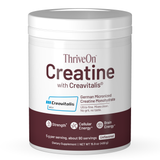
Creatine and collagen, already together.
Stronger puts 5 grams of Creavitalis® creatine and 3 grams of marine tripeptide collagen in one daily sachet. Prefer to start with creatine alone? The tub is the same creatine and nothing else. Subscriptions ship free.


